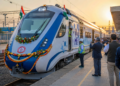


The Union Cabinet, led by Prime Minister Shri Narendra Modi, has approved the extension of Aqua Line Metro Rail Corridor from Noida Sector-51 to Greater Noida Sector-04. This extension promises to introduce approximately 8.449 Km of new metro lines, significantly improving public transportation in Noida and Greater Noida.

The Union Cabinet, chaired by the Prime Minister Shri Narendra Modi, has approved the extension of Aqua Line Metro Rail Corridor from Noida Sector-51 to Greater Noida Sector-04 as part of the Noida Metro Rail Project. This 8.449 Km corridor includes five elevated stations.
The extension aims to introduce approximately 8.449 Km of new metro lines, improving public transportation in Noida and Greater Noida, which currently lack efficient connectivity. This project also provides direct connectivity with high demand corridors, including interchange at Noida Sector-61 Blue Line.
Key zones that will be integrated by this extension include Gaur City Mall, H&S mall & office space, Blue Sapphire Mall & Commercial space at Greater Noida Sector-04, IKEA at Noida Sector-51 and Anthurium mall at Noida Sector-73. Major MNCs and IT hubs such as Tech Mahindra office, TCL Tech office at Noida Sector-60, Oil Industry Development Board at Noida Sector-73, Golden I office & commercial space at Greater Noida Sector-04 will also benefit from the extension.
Educational institutes such as Delhi Public School at Noida Sector-122 and critical healthcare facilities like Kailash Hospital, Rama Hospital at Noida Sector-70, Cloud9 Hospital at Noida Sector-51 and Rama Hospital at Noida Sector-62 are also expected to benefit.
Major residential societies such as Cleo County Residencies at Noida Sector-122 and gaur City 1 & 2 at Greater Noida Sector-04 will also be integrated with the metro network, enhancing connectivity for residents. The extension is anticipated to reduce traffic congestion, alleviate road traffic, improve overall road safety, and provide environmental benefits due to reduced carbon emissions compared to traditional fossil fuel-based transport.
Source:
Press Information Bureau